Why Casual Gamers Will Fail at MOUSE: P.I. For Hire (Despite Its Adorable Graphics)
MOUSE: P.I. For Hire, slated for a massive global release on April 16, 2026, across PC, PlayStation 5, Xbox Series X/S, and the Nintendo Switch 2, is a visual masterpiece. Developed by the Polish studio Fumi Games, a team with deep roots in award-winning animation, the game looks exactly like a classic cartoon from the 1930s.
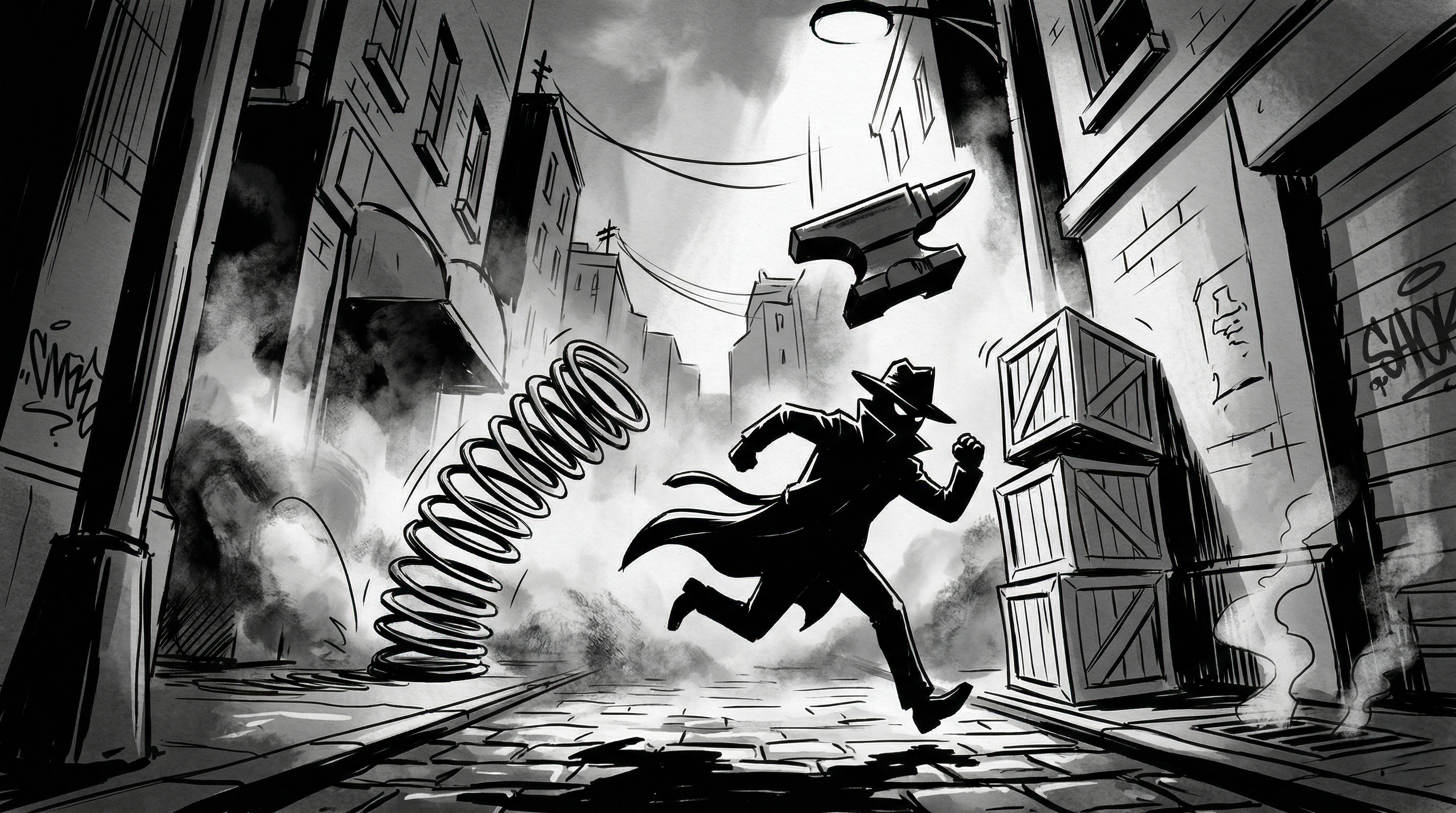
The visual identity relies entirely on a technique called “rubberhose animation.” In the early days of animation, artists drew characters without rigid skeletal joints, making their arms and legs bounce and stretch like flexible rubber tubing. Fumi Games painstakingly hand-drew every single frame of animation to replicate this style, presenting environments in a grainy, flickering black-and-white color palette that perfectly captures the era of Steamboat Willie.
Players step into the trench coat of Jack Pepper, a hard-boiled, cigar-chomping mouse detective and former war hero voiced with incredible grit by legendary voice actor Troy Baker. Operating in Mouseburg—a grimy, crime-infested city filled with corrupt cops and ruthless gangs—the story kicks off with a simple missing persons case regarding a local magician named Steve Bandel, but quickly spirals into a massive, city-wide conspiracy.
To make the world feel completely authentic, developers included an incredible big band jazz soundtrack composed by Patryk Scelina, featuring original music from Caravan Palace. Players can even dig into the game’s settings and turn on audio filters that make the game sound like it is playing out of a dusty old phonograph or a scratched vinyl record.
It is a brilliant, welcoming facade that expertly hides the absolute chaos waiting underneath.
The Mechanical Reality: A Hardcore Survival Experience
Behind the cheerful jazz and bouncy animations, MOUSE: P.I. For Hire is a notoriously difficult, fast-paced “boomer shooter” inspired by legendary, hardcore games like DOOM and BioShock. The game actively punishes players who try to play it like a slow, modern cover-based shooter. If a player stands still to admire the beautiful artwork, they will be eliminated in seconds.
To survive the crime-ridden streets of Mouseburg, players must master an incredibly fluid, high-speed movement system. Jack Pepper is armed with an arsenal of acrobatic moves, allowing him to slide under incoming fire, dash across gaps, double-jump over hazards, wall-run across buildings, crawl through pipes, and swing through the air using a grappling hook. The combat is a kinetic, high-speed dance where momentum is the only thing keeping the player alive.
Furthermore, the game strips away modern safety nets. There is no regenerating health. Players must desperately scavenge the environment for health pickups and meticulously manage their limited ammunition. This resource scarcity creates a constant sense of tension.
Between the massive firefights, the pacing slows down, forcing players to explore the environment like a true detective. Players solve puzzles to unlock new areas in a structure reminiscent of classic Metroidvania games. After gathering clues and snapping photographs at crime scenes, players return to Jack’s central office hub. Here, players interact with a massive, string-covered corkboard, physically pinning pieces of evidence together to unlock new narrative paths and destinations. The hub also features a local pub where players can engage in minigames, including a fully functional collectible baseball card deck-building game.
The Arsenal: Comedic Violence and Cartoon Logic
The guns in MOUSE: P.I. For Hire brilliantly blend authentic 1930s mobster themes with hilarious, cartoon-logic violence. The core arsenal includes period-accurate firearms, each featuring unique, unlockable alternate firing modes:
- The Micer: A trusty, rapid-fire revolver that can be upgraded to unleash a devastating burst-shot.
- The Boomstick & Kiss Kiss: A heavy pump-action shotgun that allows players to hold and charge shots for maximum impact, alongside a brutal double-barreled shotgun specialized for launching explosive shells.
- The James Gun: A classic 1930s Tommy gun. In a stroke of comedic genius, the gun’s drum magazine frequently gets jammed, forcing Jack to yank it off using an ordinary bathroom sink plunger.
Beyond standard guns, wildly experimental weapons turn the battlefield into a slapstick horror show. Players can wield the Cool-D Cold Steam Applier to freeze enemies solid, or use the Clean-D Automatic Turpentine Cleanser to literally scrub enemies out of existence, melting away their ink until nothing is left but a pile of rattling, cartoonish bones. The strangest weapon is the Mind-D Self-Aware Attitude Changer, a gun equipped with a living, exposed brain that actively alters enemy behavior. Players can even find spinach cans scattered around the levels, taking a page right out of Popeye to gain temporary, super-powered strength.
The boss fights are massive, multi-stage spectacles. Players must face down “Robo-Betty,” a giant mechanical terror fought across three distinct phases. Another terrifying encounter features the “Third Wife,” a supernatural ghost entirely immune to bullets. Players must furiously dodge her attacks while tracking her movements with a specialized flashlight, weakening her ghostly form before they can finally inflict damage.
Advanced Technical Insights: The 2.5D Engineering Challenge
While MOUSE looks magical to the player, building a game this way is a massive engineering nightmare. Built on the Unity game engine, the game utilizes a highly complex “2.5D” rendering technique. This means the developers placed entirely flat, 2-dimensional, hand-drawn paper-like characters inside a fully 3-dimensional, explorable world.
When 2D characters exist in a 3D space, it creates severe depth perception issues. Players often struggle to determine exactly where an enemy is standing, making it incredibly difficult to aim weapons or dodge attacks. To solve this, developers used a specific camera technique called “equidistant orthographic projection,” which flattens the perspective and prevents the 2D characters from looking distorted or floating off the ground.
Lighting presents another massive hurdle. In a standard 3D game, a flashlight dynamically illuminates the curves and edges of a character’s face. Because the characters in MOUSE are flat drawings, dynamic lighting does not work naturally. To prevent the characters from looking like cardboard cutouts pasted onto a screen, developers had to manually “bake” the lighting into the environments, ensuring the 2D sprites cast realistic shadows that perfectly sync with the 3D world.
The Value of Human Art in the AI Era
In early 2026, the gaming community experienced a massive controversy regarding artificial intelligence when the digital storefront GOG faced intense public backlash. It was discovered they used generative AI to create a promotional banner for a major sale, resulting in bizarre errors like a Super Nintendo console that appeared to be biologically melting onto a table. A GOG employee publicly expressed frustration, revealing their design team had been downsized to push AI tools for cost-cutting. This sparked massive outrage and fueled the “Stealing Isn’t Innovation” campaign protesting the uncompensated use of human art.
In the wake of this authenticity crisis, games relying on verifiable human craftsmanship command immense respect and consumer loyalty. Fumi Games’ dedication to drawing every single frame of MOUSE: P.I. For Hire by hand is no longer just a neat aesthetic choice; it is a powerful statement about preserving human artistry. By rejecting synthetic shortcuts, the studio generated incredible community goodwill, driving wishlists past the 1.5 million mark before the game even launches. The game’s success is also deeply tied to copyright law; following the expiration of Disney’s original Steamboat Willie copyright, independent developers are utilizing these newly public domain aesthetics to generate massive viral interest.
When looking at the competitive landscape for Q2 2026, titles like Slay the Spire 2 offer slow, methodical turn-based deckbuilding strategy, while REANIMAL delivers deeply unsettling cooperative survival horror. MOUSE: P.I. For Hire stands entirely alone. It is the only title successfully merging a pure, vintage 2D art style with aggressive, first-person 3D combat. This unique positioning ensures that MOUSE captures a massive, distinct audience eager for innovation in the shooter genre.
Written by Rahul
A dedicated lore-diver and meta-analyst who breaks down everything from indie visual novels to high-tier esports. Follow him on X/Twitter for daily gaming intel.